
Shipping from Dubai
to Qatar.
We move cargo to Qatar from Dubai every week, by sea, by air and by road. We ship business and personal cargo. Send a few boxes, a pallet, a full container, or a whole house move. We collect anywhere in the UAE, do the customs paperwork at both ends, and deliver to your address in Qatar.
Overview
Sea, road and air freight
to Qatar.
Shipping from Dubai to Qatar takes about 2 to 5 days by sea, 2 to 5 days by road, and 1 to 3 days by air. Sea into Hamad Port is the usual choice and it is quick, because Qatar is only a short sail across the Gulf. We move machinery, building materials, furniture, electronics, food and household goods. We deliver everywhere, including Doha, the Industrial Area, Al Rayyan, Lusail, Al Wakrah, Mesaieed, Al Khor, Ras Laffan, Dukhan, Al Daayen and Umm Salal. Navo Shipping handles the sea freight, land freight, air freight and customs clearance on the Dubai to Qatar route, door to door. Tell us what you are sending, how heavy it is, and where it is going, and we will tell you which way is cheaper.
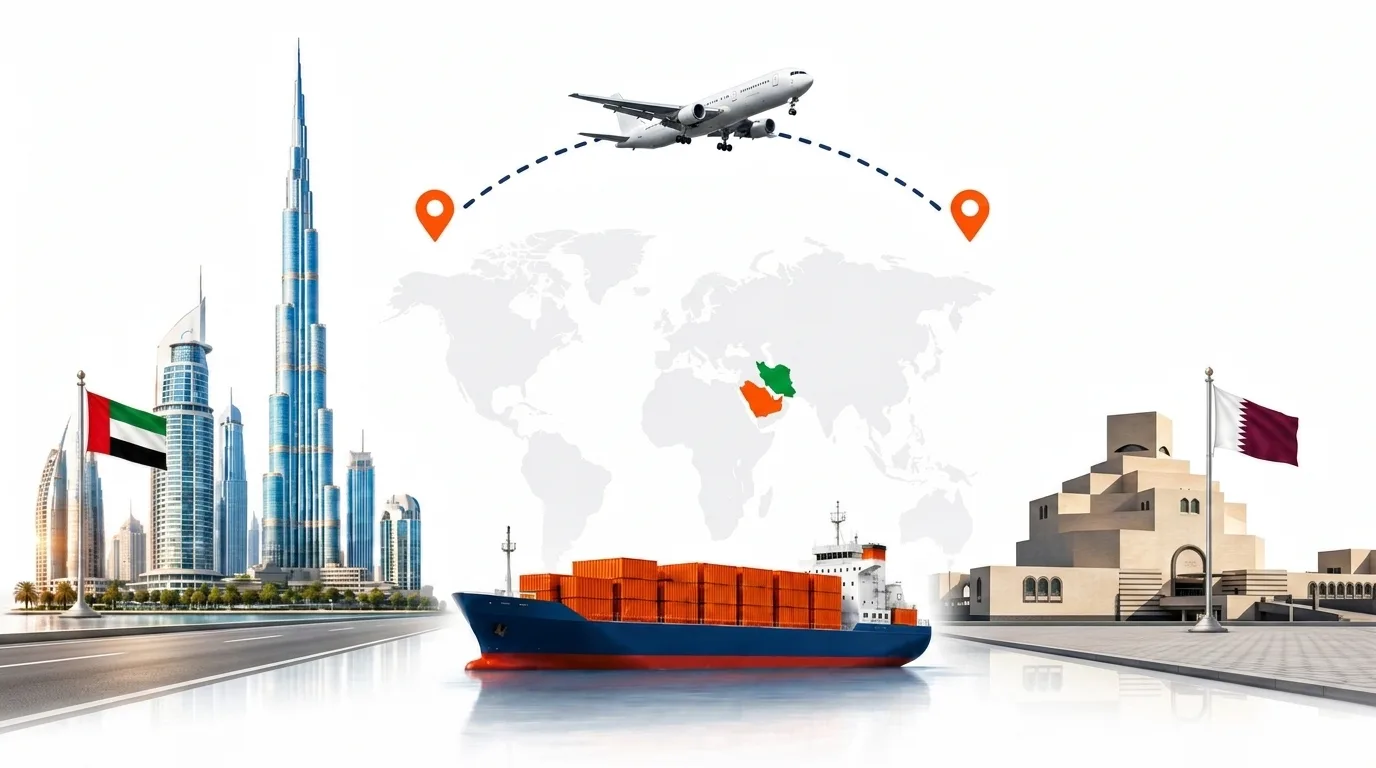
Ports and gateways
Sea ports and airports
we ship to from Dubai.
Every bill of lading carries two ports: where the cargo loads, and where it discharges. We load at Jebel Ali or another UAE port. Qatar has five sea ports we use and one airport. They suit different cargo and different inland legs, so the loading port and the discharge port are worth choosing separately.
POLPort of loading
We collect anywhere in the UAE, free zones included, and load at whichever of these eight suits the cargo.
- Jebel AliAEJEA
- Port RashidAEPRA
- Khalifa PortAEKHL
- Zayed PortAEAUH
- Port KhalidAESHJ
- Khor FakkanAEKLF
- Port of FujairahAEFJR
- Ajman PortAEAJM
PODPort of discharge
The right one is whichever leaves the shortest inland leg to your delivery address. On a long lane that leg is a shipment in its own right, so it is planned rather than assumed.
- Hamad PortQAHMDSea port · Arabian GulfDoha, the Industrial Area, Al Rayyan, Lusail and the whole country
How cargo reaches Hamad Port
Shipping from Dubai to Hamad Port is the shortest container leg we run. Jebel Ali to Umm Al Houl on the Arabian Gulf takes 2 to 5 days port to port on a full container, with a direct weekly service quoted at around 36 hours of actual sailing. Hamad Port opened in December 2016 and took Qatar's container traffic with it, so this is where almost every box lands. Sea freight is priced per container, and on a leg this short it is worth comparing an FCL against a truck before assuming the ship is cheaper on the delivered date. Get a rate for Hamad Port - MesaieedQAMESSea port · Arabian GulfMesaieed industrial city and Al Wakrah, south of Doha
How cargo reaches Mesaieed
Shipping from Dubai to Mesaieed runs the same short Arabian Gulf leg from Jebel Ali, discharging at the industrial port about 45km south of Doha. Times vary from ship to ship, so we confirm the days when we quote. Mesaieed works crude, petroleum products, LPG, chemicals, fertiliser, bulk and general cargo, so it suits industrial cargo going to the city itself. For containers and general distribution, Hamad Port has more sailings. Get a rate for Mesaieed - Doha PortQADOHSea port · Arabian GulfCruise and general cargo in the city
How cargo reaches Doha Port
Shipping from Dubai to Doha Port is possible for general and breakbulk cargo, but the old city port lost its container role to Hamad Port and has no dedicated container berths. It is listed here for completeness: if a customer asks for Doha, what they almost always need is Hamad Port, and we will say so rather than quote the wrong terminal. Get a rate for Doha Port - Ras LaffanQARLFSea port · Arabian GulfThe northern industrial city, energy and project cargo
How cargo reaches Ras Laffan
Shipping from Dubai to Ras Laffan uses a Gulf vessel booked for the industrial port's liquid, bulk or project cargo. Times vary from ship to ship, so we confirm the days when we quote. Ras Laffan suits the northern energy complex; Hamad Port is the alternative for ordinary container imports. The quote combines vessel space, specialised lifts or pumps, terminal handling, customs clearance and site delivery. Get a rate for Ras Laffan - Al RuwaisQARUWSea port · Arabian GulfThe far north, and coastal feeder traffic
How cargo reaches Al Ruwais
Shipping from Dubai to Al Ruwais uses a small coastal vessel with the call checked before loading. Times vary from ship to ship, so we confirm the days when we quote. Al Ruwais serves northern Qatar and regional general cargo; Hamad Port is the alternative for larger container shipments. The total combines coastal transport, port handling, customs clearance and onward delivery. Get a rate for Al Ruwais - Hamad International, DohaDOHAirportThe whole country, with several Dubai services a day
How cargo reaches Hamad International, Doha
Air freight from Dubai to Hamad International, Doha can fly nonstop from Dubai. Air cargo usually takes around 1 to 3 days, though flights and handling affect delivery. Hamad International suits urgent Qatar deliveries; Hamad Port is the sea alternative for bulky loads. The quote combines weight or space used, airport handling, customs clearance and delivery. Get a rate for Hamad International, Doha - Abu Samra land portLand borderThe Saudi border, and the crossing every road shipment from Dubai uses
How cargo reaches Abu Samra land port
Shipping from Dubai to Abu Samra land port travels by truck through Saudi Arabia, entering Qatar opposite Salwa. Border queues and checks vary, so we confirm delivery days when we quote. Abu Samra is the road gateway; Hamad Port is the alternative for cargo arriving by sea. The quote combines truck space, Saudi transit paperwork, border handling, customs clearance and delivery. Get a rate for Abu Samra land port
- Hamad PortQAHMDSea port · Arabian GulfDoha, the Industrial Area, Al Rayyan, Lusail and the whole country
Before you ship
Import rules
for Qatar.
Qatar is strict about paperwork, and we prepare it for you. Every shipment needs an invoice and a certificate of origin that have been stamped and approved before the goods leave Dubai. Both need the product code on them. Goods arriving without that are sent back, so it is not something to fix later. On top of that, regulated products such as car parts, tyres, some electrical goods and toys need a conformity certificate, also issued here before shipping. Not everything needs it. Tell us what you are sending and we will confirm exactly which papers apply and get them stamped for you.
Documentation
Documents you need
for Qatar.
These 8 cover most shipments to Qatar. The exact list depends on the commodity and its HS code, so send us both and we confirm what applies before the cargo is booked.
- 01Invoice showing what you paid for the goods
- 02Packing list showing what is inside
- 03Certificate of origin showing where the goods were made
- 04Bill of lading, air waybill or road manifest
- 05Dubai export paper, which we do for you
- 06Attested invoice and certificate of origin, which we arrange in Dubai
- 07Conformity certificate, if your product needs one
- 08The Qatari buyer commercial registration and import licence
Get the paperwork right in Dubai and clearance at destination is routine. Fixing a document after arrival is slow, and storage accrues the whole time it takes.

How it works
Dubai to Qatar
shipping, step by step.
Send the cargo details: what it is, where it is going, rough weight and dimensions. We come back with the routes that suit it, sea against road against air, and a written rate with a validity date on it. You pick one, we book it, and one coordinator stays with the shipment until it is delivered in Qatar.
- 01
Send the details
Tell us what you are sending, how heavy it is, how big it is, and where in Qatar it goes.
- 02
Get a price
We send you a price in writing, with sea, road and air compared so you can choose.
- 03
We stamp and ship
We get the invoice and origin certificate attested, arrange any conformity certificate, and load.
- 04
We deliver
We track the shipment and keep you updated all the way, then bring the goods to your door.
Questions
Cargo to Qatar
questions, answered.
The 15 we are asked most on the Dubai to Qatar route. If yours is not here, send it with the commodity and we will answer it directly.
Do you offer movers and packers for a house move from Dubai to Qatar?
Yes. Our movers and packers do the packing, wrapping and listing in Dubai, then we ship your furniture and household goods in a full container, or share one if you have less to send. The item by item list matters, because customs clear personal effects against it. Fuel, gas cylinders, paint, aerosols and loose batteries cannot travel, and we give you the full list before packing day.
How long does shipping from Dubai to Qatar take?
About 2 to 5 days by sea, 2 to 5 days by road, and 1 to 3 days by air. It is a short trip across the Gulf. Then add a little time for customs and delivery. We give you a date in writing when we quote.
How much does shipping from Dubai to Qatar cost?
It depends on what you send, how big it is, and where in Qatar it is going. We do not publish prices because every shipment is different. Sea freight to Qatar is priced per container when you fill one, and per cubic metre when you share one. Air freight to Qatar is priced on weight or size, whichever is greater. Send us the details and we send you a price in writing, usually the same day.
Which areas of Qatar do you deliver to?
All of them. Doha, the Industrial Area, Al Rayyan, Lusail, Al Wakrah, Mesaieed, Al Khor, Ras Laffan, Dukhan, Al Daayen, Umm Salal and Al Shamal. Just give us the address and we bring it to the door.
Which Qatari ports do you ship to?
Hamad Port handles almost everything and it serves the whole country. Mesaieed and Ras Laffan take industrial and energy cargo. Doha Port handles smaller vessels. We pick whichever suits your cargo.
Do my documents need to be stamped?
Yes. Qatar requires the invoice and the certificate of origin to be attested before the goods leave Dubai, and both need the product code on them. Goods arriving without this are sent back. We arrange the stamping for you as part of the booking.
Do you deliver door to door?
Yes. We handle freight forwarding to Qatar door to door. We collect the goods in Dubai, ship them, clear them through customs, and bring them to your address. You deal with one company for the whole journey.
Can I send a small shipment, or do I need a full container?
You can send as little as one box or one pallet. We put small shipments from different customers into one shared container. This is called LCL, or less than container load. Your goods load at Jebel Ali and come into Hamad Port. When you have more goods, you move up to your own full container, which is called FCL. We will tell you which one is cheaper.
Can you ship a car from Dubai to Qatar?
Yes, by sea or by road. Qatar has rules on the age and condition of used cars. Send us the make, model, year and chassis number and we will check it is allowed before you buy.
What is a conformity certificate, and does my product need it?
It shows your product meets Qatari safety rules. It covers car parts, tyres, brake pads, some electrical goods and toys, among others. It is issued here in Dubai before shipping. Many products do not need one, so tell us the product and we will check.
Do you handle customs clearance in Qatar?
Yes, at both ends. We do the export papers in Dubai and clear the goods in Qatar through the national system. You do not need to find your own clearing agent.
Can you collect the goods from my supplier in Dubai?
Yes. We collect anywhere in Dubai, Sharjah, Abu Dhabi and the rest of the UAE. We can also hold your goods in warehousing and storage in Dubai until you are ready to ship. That helps when you are buying from several suppliers and want everything to travel to Hamad Port in one container.
Can you ship machinery and building materials to Qatar?
Yes, and it is a lot of what we move on this route. Heavy and oversized items go in open top or flat rack containers, or on flatbed trucks. Send us the size and weight.
Can you move my household goods to Qatar?
Yes. We move full house moves and part loads. We pack, collect, ship and deliver, and we handle the customs side so your things are not waiting at the port on paperwork.
Can you deliver to the free zones?
Yes. We deliver to Umm Alhoul and Ras Bufontas free zones as well as the Industrial Area. Free zone deliveries have their own paperwork, so tell us at the start and we will set it up correctly.
Ready to ship from Dubai
to Qatar?
Send the commodity and its HS code, the weight and dimensions, and the delivery address. We confirm what Qatar checks before you ship, then the routing options, then a written rate with a validity date on it.
- Written rates
- One coordinator
- Customs handled in house
- UAE-wide collection